United Kingdom · Beginner guide
Thinking of starting skating — but worried you're too old?
You're not. Here's how to handle embarrassment and fear, what your first weeks actually feel like, and how to start without pretending you're sixteen again.
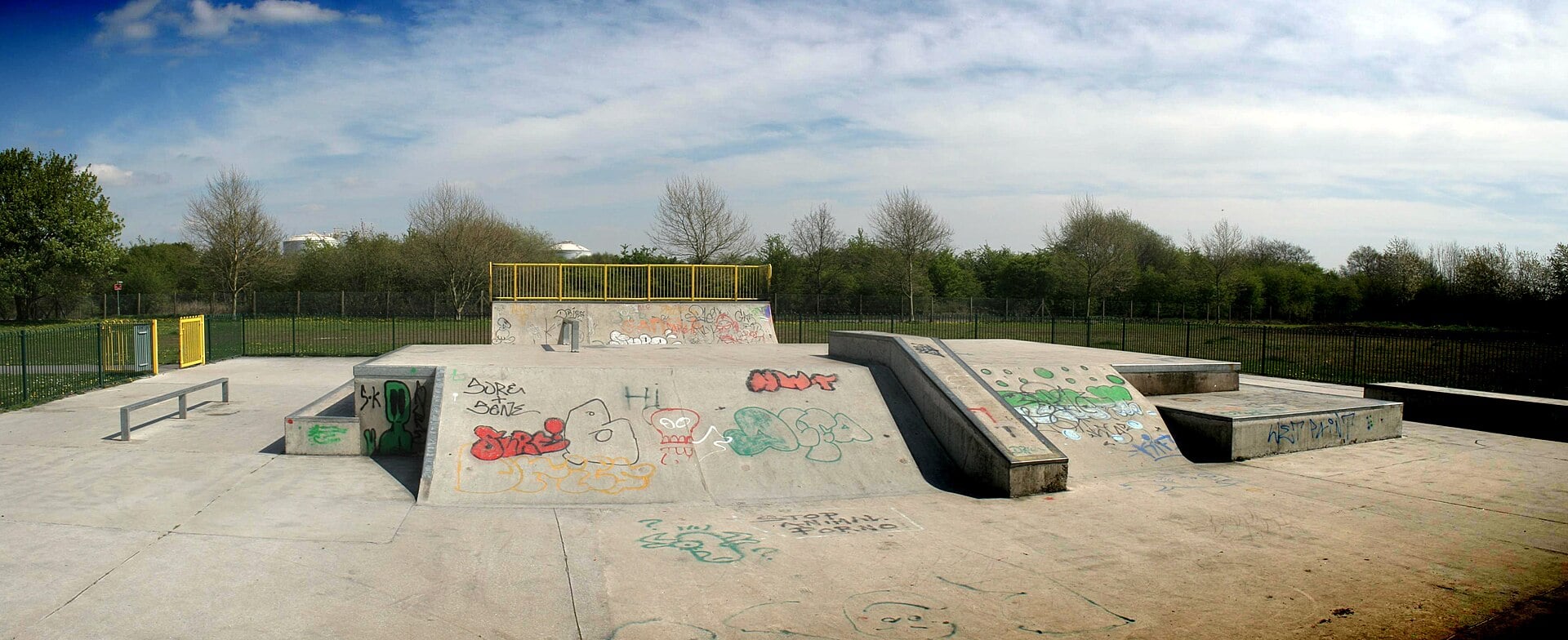
Skatepark in the UK
11 min read
The short answer
There is no age limit on learning to skate. Adults start at every age — at council parks, in car parks, and at indoor sessions built for grown-ups. Skateboarding is hard at every age; what changes as an adult is usually confidence and recovery, not whether you are allowed to try.
If you have been telling yourself *I'm too old*, what you often mean is *I'm afraid of looking foolish* or *I don't want to get hurt*. Those are real. They are also workable.
Why it feels embarrassing before you even step on a board
Most adults spend their days being competent at work, parenting, driving, whatever pays the bills. Skateboarding puts you back at beginner level in public. That clash is uncomfortable — and very normal.
A few things that make it feel worse than it is:
The spotlight effect. We overestimate how much others notice us. At a skatepark, most people are watching their own feet, their own slam, their mate's line. You feel like a billboard; in practice you are background noise unless you are in someone's way.
Comparing your day one to someone else's year ten. Social media and park regulars show confident riding. You do not see their first month of wobbles. Your only fair comparison is you, last week.
Old stories. Maybe you tried at school and stopped. Maybe someone laughed. That memory is not a forecast — it is one moment from a different life.
Protective ego. Saying *I'm too old* is sometimes a shield: if you never start, you never fail in front of anyone. Gently calling that out is not insulting; it is honest. You can still choose to start anyway.
Fear: what it is and what it isn't
Fear on a skateboard usually splits into three buckets:
- Falling / injury — pads, helmet, flat ground first, learn to bail low, shorter sessions
- Judgment — quieter times, adults-only sessions, one supportive friend, tiny goals
- Losing control — slower progression, wider board, softer wheels, lessons
Research and coaching practice for adult beginners consistently say the same thing: progress slowly on purpose, wear protection, and learn how to fall before you chase tricks. Most beginner falls are slow and low — stepping off, sitting down, a wobble at walking speed. The dramatic slams online are usually experienced skaters going fast on hard tricks.
Fear does not mean stop. It means respect the risk and shrink the session until your body believes you can bail safely.
What to actually expect (so reality doesn't shock you)
Before your first session, expect nerves. That does not mean you are not ready — it means you care.
Minutes 0–20 are often the roughest: the board feels alive under you, you tense up, every crack in the ground feels huge. Many adults report that something clicks between twenty and forty minutes — pushing feels less alien, you relax your shoulders, you might even enjoy it.
Week one is not tricks. It is standing, pushing on flat, maybe a kick-turn, learning how to step off when it feels wrong. If you can roll on flat without panic, that is a win.
Weeks two to six add gentle banks, better balance, and the habit of showing up. Adults who quit early often tried to skip foundations because ollies look achievable on a screen. They are not achievable in an afternoon — at any age.
Your body may be stiffer than a teenager's. Warm up hips, knees, and ankles. Two 45-minute sessions beat one two-hour hero session that leaves you sore and convinced skating "isn't for you."
Other people will not ask your age. They might ask if you are new, offer a tip, or ignore you. Respect and awareness matter more than skill level.
Getting past embarrassment — practical moves that work
These are not affirmations; they are behaviour changes that adult beginners use repeatedly:
1. Pick a soft first venue. Weekday daytime at a local council park, or a booked beginner / adults-only slot at an indoor park. Avoid your first go on a packed sunny Saturday at a famous spot unless you are happy watching from the side first.
2. Wear pads without apology. Helmet, wrist guards, knee pads. They are not a costume of shame — they are how you try more than once. Plenty of confident adults still pad up when learning something new.
3. Set a goal so small it sounds silly. "Push on flat for twenty minutes." "Stand on the board and roll twice." Meeting a tiny goal trains your brain that you can show up again.
4. Bring backup. A friend who does not skate still counts. Someone learning with you is even better. You are not performing; you are practising.
5. Say one sentence out loud. "First time in years" or "just learning as an adult" to one person breaks the ice. Most skaters remember being new or rusty.
6. Leave on a good note. Stop before you are exhausted, furious, or forcing tricks. A short positive session is how people come back.
7. Separate learning from proving. You do not owe strangers a trick. You owe yourself consistency.
You're allowed to go slow (that's how adults succeed)
Adult beginners who last tend to share habits:
- Regular short sessions over rare marathons
- Flat ground and fundamentals before the deep end of the bowl
- Lessons or coached sessions when pride is blocking progress — a good coach teaches falling early and never makes you feel silly for asking
- Gear that fits now — wider deck, softer wheels for rough UK concrete, shoes that grip
There is also something quietly good about learning a physical skill as an adult: it is humbling, absorbing, and joyful when something clicks. Most of your life is doing things you already know. Skateboarding gives you beginner brain again — and many people find that worth the awkward first month.
When "too old" might mean "check with your body"
Honesty matters. If you have major joint issues, balance disorders, or medical advice against impact sports, talk to a GP or physio first. Skateboarding can be gentle (cruising, flat ground) or intense (stairs, handrails). You choose the level.
For many healthy adults, the limiter is fear and habit, not biology.
Your next steps on NTLTS
When you are ready to move from thinking to doing:
- What to wear and bring — kit that actually helps
- Choosing a beginner skatepark — pick a sensible first spot
- First visit to a skatepark — first 30 minutes, step by step
- Skatepark etiquette — how not to be "that" person
- Getting back on the board — if you skated years ago and want back in
Find parks rated for beginners on our beginner-friendly map. Look for adults-only or coached sessions on Sessions when you want a room full of people who are not teenagers.
The line we care about
Never Too Late To Skate is not a dare to drop in on day one. It is permission to start as you are — older, nervous, rusty, excited — and to keep showing up until the board feels like yours.
You are not too old. You are early in your story.
Ready to skate?
Find a beginner-friendly park near you and save it for later.